Fuerteventura with kids: what the island really offers families
Updated October 14, 2026 · 10 min read
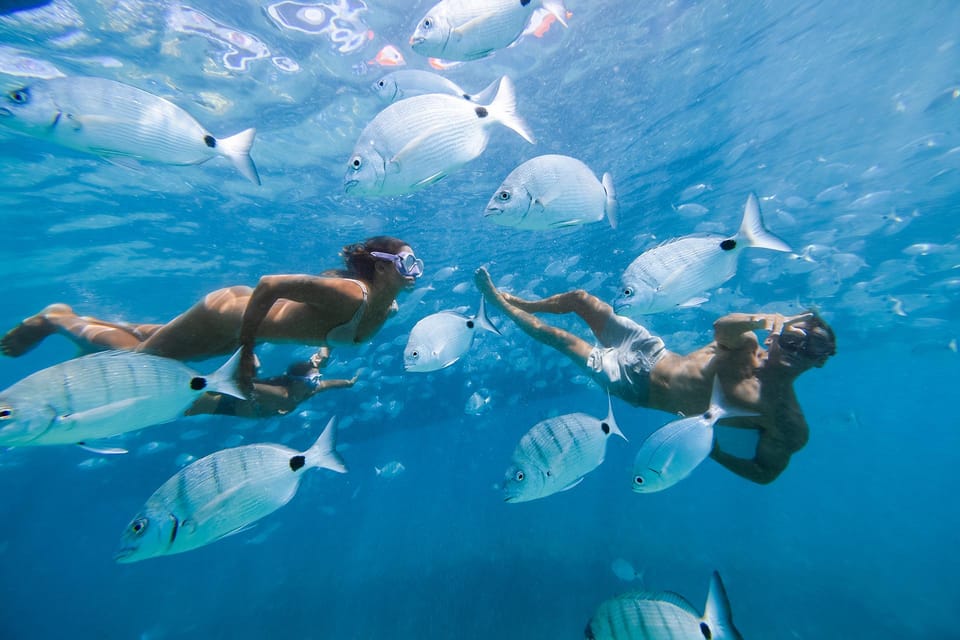
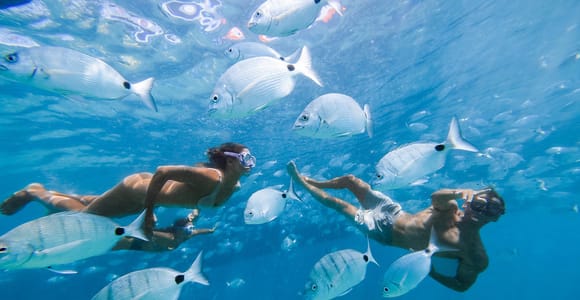
Fuerteventura works for families as long as you plan around the wind: beach in the morning, something sheltered in the afternoon. The beaches for small children are the lagoons at El Cotillo and the bay at Caleta de Fuste, not the famous dune beaches. And the trip that works most reliably with children is the ferry to Isla de Lobos with snorkelling at €27: a quarter of an hour across, then the shallow clear water at the Puertito. For older children who have nothing left to do with shallow pools, the surf lesson for kids and families from €54.15 is the answer.
Five trips that work with children
| Excursion | Duration | From | Rating | Best for |
|---|---|---|---|---|
| Isla de Lobos: ferry and snorkelling | return trip | €27 | 4.5 ★ · 904 | families with primary-school children ready to snorkel |
| Speedboat to Isla de Lobos | 15 minutes | €16 | 4.8 ★ · 1,973 | families whose children cannot yet manage a long boat ride |
| Glass-bottom boat with lunch | 4 hours | €75 | 4.4 ★ · 1,514 | families with school-age children who enjoy half a day on board |
| Oasis Wildlife: entry ticket | at your own pace | €41.50 | 4.6 ★ · 3,699 | families on the days when the wind ruins everything else |
| Surf lesson for kids and families | 3.5–4.5 hours | €54.15 | 4.8 ★ · 56 | children who will no longer sit still on a beach |
Check availability for the ferry with snorkelling to Isla de Lobos
The island sells itself as a family destination, and for the most part that holds up: gently shelving beaches, water warm enough to swim in all year, short distances inside the resorts, 181 bookable offers starting at €12.50. What the advertising pictures leave out is the wind. It is the one thing that separates this island from every other family destination, and it decides how a holiday day here runs.
The wind, honestly reckoned
The trade wind blows across Fuerteventura on most days of the year, mainly from the north to north-east. The island is flat and lacks the mountains that absorb part of the wind on the higher Canary Islands. The usual pattern through the day: calm in the morning, freshening around midday, blowing hard by the afternoon.
For small children this is not a side issue. It is not the chill that bothers them, it is the sand. On open stretches of beach it drives along just above the ground from the early afternoon onwards, and a child sitting in the sand is at exactly that height. Twenty minutes later there is sand in the food, in the bag and in everyone’s eyes. Families with the youngest ones therefore move the beach to the morning. How to resolve that across the day is covered in detail in Fuerteventura with a baby and Fuerteventura with a toddler.
That same wind is the reason older children take something home from here that no windless Mediterranean beach gives them. Surf lessons start at €50, with a median price of €54.08; the lesson for kids and families costs €54.15 for three and a half to four and a half hours, taught by an instructor with a lifeguard licence. The surf schools set very different lower limits: in Corralejo the range runs from six to fourteen years depending on the school, and for the youngest there is often only a private or family lesson rather than an open group. What applies to the course you book is stated on that operator’s booking page. Windsurfing and kitesurfing is the pricier step up, from €63.75 and with a median of €130.
See dates for the surf lesson for kids and families
The beaches where the sand stays put
The island has four spots that work differently for families than the open Atlantic shore does.
The lagoons of El Cotillo in the north-west sit behind an offshore reef. The water stands in shallow pools, you can wade a long way out, and at low tide it leaves puddles with small crabs in them that hold children’s attention longer than any playground.
Caleta de Fuste on the east coast is the opposite approach. The bay is man-made and sheltered by a breakwater, there is barely any swell, and the entry into the water is gentle. For a child’s first meeting with the sea it is the calmest place on the island – and thoroughly boring for a ten-year-old after three days.
In Corralejo the equivalent is the Muelle Chico, the old harbour beach between the two jetties, barely a hundred metres long and right in front of the bars.
The lagoon at Playa de Sotavento near Costa Calma is the most eccentric case. It fills with the tide to anything between a few centimetres and hip depth, but it does not fill every day, mainly around new moon and full moon. When it is in, it is an enormous warm paddling pool. When it is not, you have a wide expanse of sand and the strongest wind on the island.
Which area suits which family
Corralejo in the north has the widest choice: the dune nature park on the doorstep, the water park, the ferry to Lobos, restaurants open late. On wind it sits in the middle of the field: the strongest wind is in the south, where the trade wind accelerates across the narrow Jandía isthmus and hits Costa Calma and the Sotavento lagoon.
Caleta de Fuste in the middle of the island is the choice when calm matters and the drive from the airport should be short. It is the obvious base for families with very small children and the weakest one for teenagers.
The south around Costa Calma and Jandía lives off kilometre-long beaches and off the surf centres. Morro Jable at the southern tip has the harbour that most boat trips leave from. One point that matters when picking a resort: Corralejo and Morro Jable are about 111 kilometres apart by road, which takes a good hour and a half. A boat trip in the south is not a half-day outing from Corralejo, it is a full day in the car. Which landscapes and towns in between are worth the detour is covered in what to see in Fuerteventura.
Which trips children can handle
Isla de Lobos is the classic, and with 11,501 reviews it is the most reviewed boat section on GetYourGuide. The ferry from Corralejo costs €17 return, the speedboat €16, and the crossing takes around a quarter of an hour; the ferry and snorkelling combination costs €27. For primary-school children the little island is an adventure: clear shallow water at the Puertito, a volcanic cone, no cars. You need a free authorisation from the Cabildo because visitor numbers are capped, and you should know that there is almost no shade on the island and only one place to eat.
The island’s most reviewed trip is dolphin and whale watching from Morro Jable: two hours, €49, drinks and a swim stop included, 5,248 reviews. At 4.2 stars it is also the weakest rating among the twenty most reviewed offers, level with the Jandía buggy tour, and the reason is obvious. Animals are never promised, and a child who spends two hours looking at empty water finds it long.
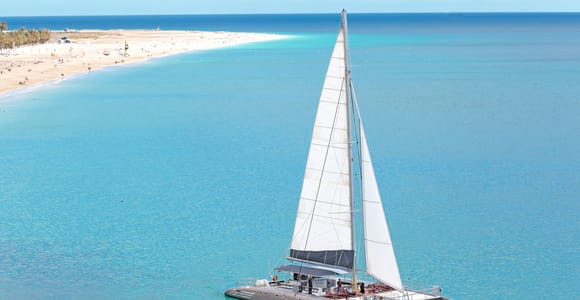
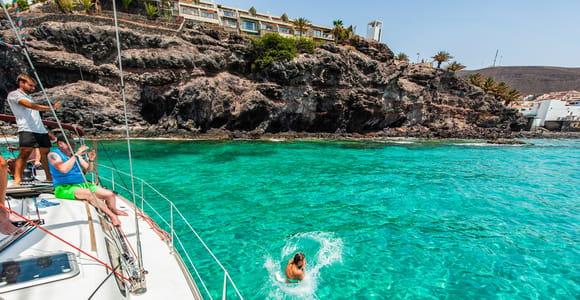
Calmer and more dependable for younger children are the glass-bottom boat with lunch at €75 over four hours — 4.4 stars from 1,514 reviews — and the catamaran trips, which start at €62 and cost €79 on average. On land, the Oasis Wildlife park near La Lajita in the south, at €41.50 admission with more than 3,000 animals, is the most reliable plan for a day when the wind rules everything else out; the Oasis Wildlife entry ticket holds 4.6 stars from 3,699 reviews. More on what there is to do on land is under things to do in Fuerteventura.
Check availability for the glass-bottom boat with lunch
See prices for the Oasis Wildlife entry ticket
When something is a bad idea
Cofete. It is the most spectacular beach on the island, but the way there is a gravel track of around 20 kilometres from Morro Jable that takes a good fifty minutes, and most rental contracts forbid leaving the tarmac. With children in the car the guided jeep safari at €65 over three hours is the sounder route; with a baby neither option works.
Buggy and quad tours from €60 are loud and dusty and carry age limits that depend on the seating position. The day trip to Lanzarote with Timanfaya and the Jameos del Agua costs €160 and runs fifteen hours by ferry and coach. For children of about ten and up that is a big day out, below that it is a very long one. Whether and when island hopping is worth it is the subject of what to see in the Canary Islands.
And the water park in Corralejo: part of the slides is only open from 1.20 metres in height, and the park runs a summer season and closes in winter. The exact months change from year to year, so check before you travel.
Minimum age
For boats this is the most frequent question, and there is no blanket answer. Operators set very different limits depending on the type of boat, the duration and the swell; only the relevant booking page is binding. Which type of boat is reasonable at which age, and what to watch for regarding shade, toilets and swell, is set out in boat trips with kids.
Our recommendation
For most families: the ferry to Isla de Lobos with snorkelling at €27. A quarter of an hour across, then an island with no cars and the shallow clear water at the Puertito, both in one booking. 4.5 out of 5 stars from 904 reviews. Anyone who does not need the snorkelling takes the plain ferry at €17 — with 3,521 reviews the better documented of the two, listed with every other crossing under Isla de Lobos. Check before you pay whether the Lobos permit is included, and take water, a hat and sun cream: there is practically no shade over there.
For families with the youngest: the speedboat to Isla de Lobos at €16. Fifteen minutes is the smallest dose of boat available here, and at 4.8 stars the best rating in this group. In any swell, though, the hull slams — for a child who cannot make sense of that, the slower ferry is the better choice.
For half a day on board: the glass-bottom boat with lunch at €75. Four hours with food, drinks and an underwater deck. With a toddler who has had enough after forty minutes it is a bad idea.
For windy days: the Oasis Wildlife entry ticket at €41.50. More than 3,000 animals, 4.6 stars from 3,699 reviews, and you set the pace yourselves. From the north, though, La Lajita is a whole day with two long drives around it.
For older children: the surf lesson for kids and families from €54.15. Three and a half to four and a half hours with an instructor who holds a lifeguard licence. For the youngest it is not suitable; whatever lower limit the school you book sets is stated on its booking page.