Sotavento lagoon: what to check before booking kitesurfing
Updated September 12, 2026 · 6 min read
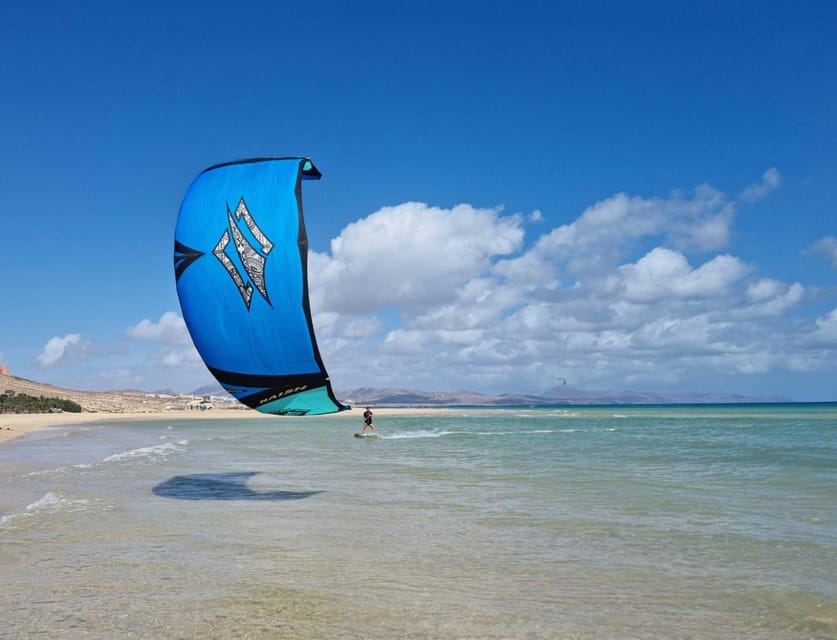
The photograph that sells Sotavento is usually the one with a broad sheet of turquoise water behind the beach. Arriving to find sand instead is not evidence that you came to the wrong place. The lagoon depends on the tide, and choosing a hotel beside it does not buy a week of guaranteed shallow-water lessons.
For a kitesurfing holiday, make two separate checks before paying: whether the lagoon is expected to hold useful water during your dates, and where the school will teach if it does not. Neither answer comes from the word “Sotavento” in an excursion title.
Start with the lagoon calendar
René Egli’s lagoon page links its 2026 timetable and explains that filling depends on tides around the full and new moon. Use that calendar for your actual dates rather than a photograph or a general promise of high tide every day.
A listed water level is an estimate, not the depth across the entire beach. Even when the lagoon fills, the appropriate teaching area depends on the activity and conditions. Ask the centre to interpret the date for your course instead of deciding that any visible water will be enough.
If you are visiting just to see the lagoon, the same distinction matters. You can still visit the beach when it is not full, but you should not sell that outing to your family as an afternoon in a permanent natural swimming pool.
Why people choose this windy corner
The centre’s location explanation describes local acceleration of the north-easterly trade wind around Sotavento. Wind that is useful to an experienced rider can be the very thing that makes a waiting companion uncomfortable on the sand.
Summer interest in Sotavento is therefore understandable, but “summer” is too broad to be a lesson forecast. The forecast for the day, the usable water and your current level still have to work together. We do not assign a wind probability or promise that booking in a particular month solves all three.
For a beach holiday with one experimental lesson, prioritise a flexible appointment. For a trip built around the sport, discuss several possible teaching days with the centre before filling the rest of the week with excursions. Leaving options open is more useful than picking a date from a postcard.
Lagoon teaching and open-sea teaching differ
Ask explicitly whether your chosen course is planned in the lagoon, in open water or at another location. These are different environments. An operator may describe more than one teaching area without promising that the shallow one will be used for your booking.
Our inventory dated 12 September 2026 includes a Fuerteventura kitesurf lesson with hotel pickup, tour 924953, at €150 per person for three hours. Its short description mentions radio assistance, a support boat and both deep-water and lagoon teaching. It does not establish that the lagoon is Sotavento. We therefore do not present that price as a verified René Egli course price.
This is the question to send before reserving: “Which beach and teaching area does my selected option use, and what changes if the water or wind is unsuitable?” A precise answer can prevent buying the correct sport in the wrong place.
Rental is a different purchase
The Costa Calma equipment-rental offer, tour 861633, starts at €85 per person in the same inventory. Its short description offers kite equipment rather than a beginner lesson, and no duration is specified. That price cannot be compared directly with a three-hour taught session.
If you have never controlled a kite, selecting rental because it is cheaper does not provide the missing instruction. Experienced riders should still confirm equipment sizes, rental period and the service available at the intended spot. “Use wherever conditions suit” is not a promise of support at every beach.
Ask separately about equipment insurance and any excess. A deposit is money held or charged under the booking terms; it does not by itself describe the amount you could owe for damage. Obtain the applicable terms instead of assuming that an advertised equipment price is the whole financial commitment.
What the lesson duration includes
An introductory session has explanations and equipment preparation before meaningful riding time. Ask whether the stated hours include transport, changing and land practice. Three hours on a booking calendar should not become three hours on the board in your expectations.
Also establish whether students share equipment and how the instructor divides time. A small group can still involve watching another learner practise. That may be useful teaching, but it is different from having an instructor and equipment entirely to yourself.
Choose a language you can follow readily. Radio assistance helps only when you understand the instructions. Tell the school your actual experience, including any previous lessons, rather than selecting an advanced label because you have tried another board sport.
Plan for the person staying on shore
The rider and the non-rider need different plans. Ask where your companion can wait, whether shade and toilets are available there, and how far the teaching area may move from the meeting point. A hotel in a promotional image does not make its facilities part of your ticket.
With children, confirm the selected programme’s minimum age and any size or weight conditions directly. Operators set different limits; the booking page and the centre should provide the applicable answer. Shallow water does not remove the need to settle those conditions.
Compare the local windsurfing and kitesurfing selection once you know the teaching location. If your aim is to try riding waves without a kite, our north-versus-south surf comparison deals with that separate choice. Keep the tide calendar beside the booking calendar until the centre confirms your arrangement.